
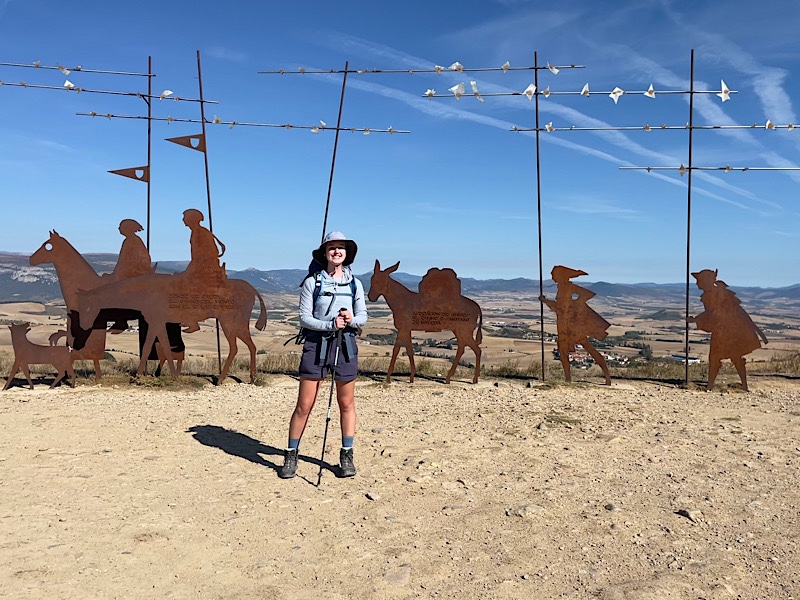
Pamplona to Puente La Reina / 15.4 miles
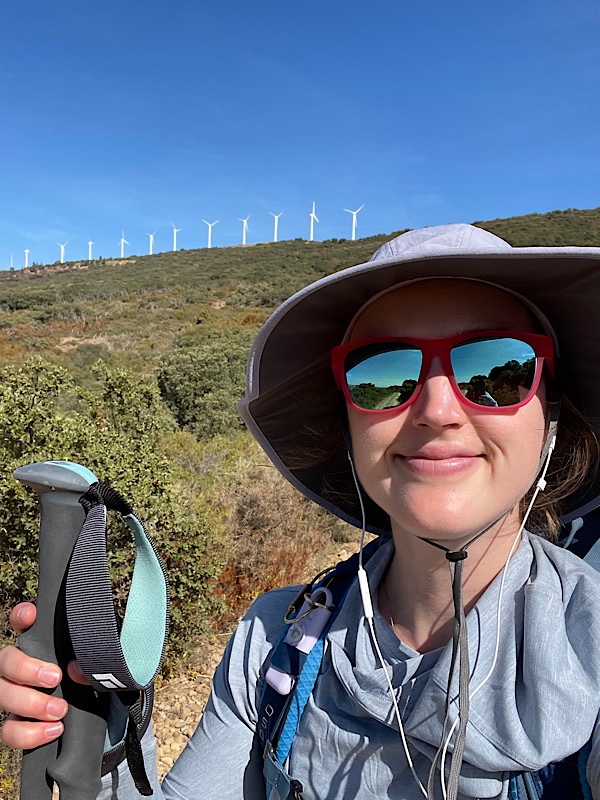
Day 4 started before dawn. After scarfing down a protein bar and a banana among the barracks at the albergue, I walked out the door and immediately met Andrew, my new Romanian friend who hikes in fashion sneakers. We made our way together from Pamplona’s historic center, past the Universidad de Navarra campus, and into the town of Cizur Minor, where I desperately needed a bathroom. Thankfully, a small cafe appeared like a beacon on a hill, and I pulled us inside, where we ran into Michael, another peregrino I’d bumped into here and there. After a cafe con leche and ham and cheese sandwich, the three of us walked together up into the hills that climb westward of Pamplona. Massive windmills lined each ridgeline, and when I got close enough, the wind they created nearly blew my hat off the mountain. It was nice to walk with new friends for a while. We shared stories about our lives back home, and they gently teased me for walking so quickly. In all seriousness, walking with them was good for my pace, because I was forced to slow down slightly into a more appropriate walking speed. Which, it turned out, was long overdue, because by the time I got close to the top of the mountain, I felt a pull in my left upper quad. It wasn’t game over, but it was painful enough where I knew I was on thin ice. The rest of the day was either downhill or flat, putting less stress on my quad, but by the time I got to Puente la Reina my body was totally exhausted.
Puente la Reina was a really cool town, with centuries-old streets with balconies full of flags and peoples’ laundry. My albergue for the night cost only 7 euros, which, I learned, doesn’t cover soap in the bathrooms or a bunk bed that doesn’t make extremely loud popping sounds with the slightest shift in movement. (I don’t say this as a complaint, but merely for color commentary.) I spent the afternoon walking around the town, grabbing a few pintxo sandwiches for dinner. By the time I made it back to the albergue around 8:15pm, my legs almost couldn’t support me any more. I was standing at the sink brushing my teeth when my right quad started shaking from exhaustion. By the time I made it into my bunk, I was officially worried about how I’d walk on the next day.
Jeff encouraged me to take the next day off to rest, which, after some gentle coaxing, sounded like a very good idea. I didn’t want to make my minor quad strain something major, and my legs were overdue for a break. In my four days of walking, I hadn’t spent any time in the afternoons simply resting with my feet up, meaning my muscles had had minimal time to recover. I’d also been walking 15 miles every day at my normal walking pace – the pace I walk at home, for max three or four miles, without an extra 20 pounds on my back. I can’t believe I was surprised I was tired. So that night, lying on my squeaky bunk at the albergue, I booked a private hotel room for the next day, where I slept all afternoon and moved my body as little as possible. I got real rest for the first time since I started hiking, and I had time to pick up some KT tape and other supplies from the pharmacy to make my next hiking day better for my legs. The rest really paid off to make Day 5 doable without real pain, just fatigue.
Frankly, I was a little embarrassed to take a full day off after only four days of walking, especially when I see so many people who are much older and appearing less fit continue on without apparent problem. But I’m so glad I took the day to rest and think about changes I needed to make to make my hike more sustainable. The three biggest adjustments I’m making are to:
- Walk at a slightly slower pace (and significantly slower on uphill);
- Take more breaks with my feet up, changing my socks at least once during a day’s hike;
- Drink a half liter of water per hour of walking; and
- “Get horizontal” as quickly as possible, meaning as soon as I shower, do laundry, and eat lunch, get into my bunk and lie down for a few hours so my legs have more recovery time.



 Allison Cowie
Leave a comment